
Author: JIN LI, LINGFANG IVY LI, YIYANG ZHOU, YAO HUANG
Artificial intelligence is reshaping how firms coordinate operations and evaluate performance. For Dingdong, one of China’s leading fresh-delivery platforms, the shift began in 2022 with the introduction of the Voice of Customer (VOC) metric. The company sought to strengthen service quality and elevate operational efficiency. Over the next three years, Dingdong redesigned and automated its performance evaluation system. By the third quarter of 2025, VOC tagging had fully transitioned to AI, with accuracy exceeding 92 percent. Today, VOC is one of the central components of the firm’s performance management system.
Company Overview
Corporate Profile
Founded in 2017 in Shanghai, Dingdong operates a fresh-delivery service covering major metropolitan areas, including Shanghai, Hangzhou, Suzhou, and Shenzhen. The platform spans a full product assortment from fresh produce to daily essentials. Dingdong listed on the New York Stock Exchange in 2021 and recorded RMB 23.07 billion in revenue in 2024.
Operating Model
Dingdong’s business covers the entire supply chain, including sourcing, procurement, quality control, warehousing, delivery, and post-sales support. To coordinate these activities, the company uses a “7+1” model that combines seven quality-control nodes with a dedicated customer-experience function. The organization is built around three centers: Product Center (sourcing and product management), Service Center (front-warehouse operations and delivery), and Customer Service Center (after-sales service and user-value analytics).
From Manual VOC Tagging to AI Automation
VOC as a Management Tool
As Dingdong shifted its strategy from scale to efficiency in 2022, customer feedback became a more important source of operational insight. The company pay more attention to the analysis and assessment of customer feedback, and thus formalized VOC as a system for collecting and analyzing user input, including complaints, suggestions, and positive feedback. It also established a preliminary workflow for data collection, classification, consolidation, and reporting.
Early Implementation and System Refinement
Initially, the Customer Service Center collected post-order feedback and applied tags based on a list developed jointly with the Product and Service Centers. Each tag corresponded to a specific operational scenario and defined the responsible unit.
During the first months of implementation, departments needed time to adapt. VOC data had previously served as internal reference material rather than compensation-relevant metrics. With income now tied to VOC scores, attribution became more sensitive. In fresh delivery, many issues, such as packaging damage or spoilage, were challenging to assign precisely due to incomplete information.
To improve clarity, the company conducted a comprehensive review to refine the initial tag list. During the first six months after the formal launch of the VOC system in May 2023, more than 200 of the original 300 tags were removed for ambiguous definitions, low usage, weak attribution logic, or limited relevance. The remaining 82 scenario tags formed the official framework.
When responsibility was genuinely unclear, joint accountability was used. Appeals could be submitted through a designated channel and were reviewed by headquarters. Weekly VOC report meetings addressed recurring issues. These efforts improved usability of the VOC metrics, although manual tagging still faced challenges of consistency and efficiency.
Transition to AI-Driven Tagging
Manual tagging became increasingly difficult as the VOC volume grew and issues diversified. Limitations in the early tag system and inconsistent human interpretation led to accuracy concerns and a large number of employee appeals. Some business scenarios did not map cleanly to existing tags or involved unclear attribution, and different employees often read the same VOC description differently, making it hard to reach consensus. To improve both accuracy and objectivity, Dingdong decided to introduce AI-based automated tagging.
The transition followed a continuous cycle of “feeding, training, sampling, and feedback.” The AI model was first trained on datasets selected by human reviewers as well as official tag definitions, allowing the algorithm to learn the standards used in manual evaluation. After the model produced initial tagging results, the VOC team and relevant departments reviewed the outputs, discussed discrepancies, and fed the corrections back into the model for further calibration and optimization.
Dingdong rolled out AI tools in phases across VOC channels. With repeated rounds of training and verification, tagging accuracy rose steadily and began to align closely with human decisions. As computational capacity improved, the company expanded deployment step by step. By the third quarter of 2025, Dingdong had achieved full AI tagging across all VOC channels, with accuracy above 92 percent. From that point onward, AI-generated tags became the basis for performance assessment.
VOC Assessment and the Company’s Overall Performance Evaluation
Formulating and Implementing VOC Assessment Standards
Once AI tagging is completed, the Customer Service Center compiles VOC-based scores for departments and individual employees. Senior management uses these results in formal performance reviews. The VOC system follows the principle of “headquarters sets the metrics, department managers set the values.” Headquarters defines the overall VOC performance direction and standardized metrics; managers then translate these into concrete, executable standards and weights that suit their business units.
VOC results are incorporated into monthly and annual evaluations and linked to compensation. Most employees receive performance bonuses representing 10 to 30 percent of their total pay.
The Relationship Between VOC and the Overall Performance System
Within Dingdong’s broader evaluation framework, the AI-enabled VOC metric is one component of a comprehensive assessment. Middle managers influence employee outcomes through semiannual performance ratings and promotion decisions. Evaluations consider tenure, monthly performance averages, self-assessments, and supervisor ratings.
VOC interacts with other indicators in a dynamic, complementary manner. The weight of hard metrics and soft evaluations varies across departments. In the Product Center, VOC accounts for roughly 10 to 20 percent of performance scores. Frontline departments focus mainly on KPIs. Middle-office roles split performance roughly equally between KPIs and OKRs. Functional departments emphasize OKRs, with VOC incorporated as part of monthly evaluations and adjusted according to departmental goals.
Managerial Flexibility
Dingdong’s business priorities change by quarter. Some periods emphasize order volume to secure scale; others focus on VOC performance to improve user experience. Managers must balance VOC with other indicators and adjust weighting based on the priorities of the period before forming an overall evaluation.
For example, supervisors of front warehouses receive many delivery-related VOC cases. These may affect couriers’ VOC scores and, in some cases, their income. But overall evaluation also considers order-completion volume and supervisor assessments. When volume is the primary focus, a courier with high delivery output may still receive strong rewards even if VOC performance is weaker.
Managerial discretion also applies in handling conflicts between VOC and other important indicators. VOC is one metric among many, and managers have room to protect high-value employees when their overall contribution is significant. Employees can also file appeals for disputed tags, and more than half of these appeals succeed. Appeals are handled at the management level rather than by immediate supervisors.
Future Directions for AI Development
Building on the success of AI in VOC management, Dingdong is now exploring broader applications of AI across its operations. The company is working to refine its models and analytical methods further, using initiatives such as internal AI competitions and VOC Open Day events to raise employee awareness and encourage experimentation with new analytical approaches. These efforts aim both to deepen understanding of AI tools and to increase additional opportunities for efficiency gains and innovation.
At the same time, Dingdong hopes to strengthen its competitive differentiation through AI-driven insights. Rather than simply matching industry standards, the company seeks to identify what truly distinguishes its service. By analyzing the needs of its core users, AI helps the firm identify meaningful points of differentiation; one example is Dingdong’s continued use of human customer service, which remains unique among major fresh-grocery platforms.
The company is also moving toward more fine-grained management supported by AI. With more precise tagging and richer behavioral data, Dingdong can begin to construct detailed profiles of products, employees, and customers. These profiles support more nuanced operational decisions and enable more refined approaches to performance evaluation.
The continuing development of Dingdong’s AI initiatives reflects the organization’s attempt to align digital tools with its existing performance framework. As these systems evolve, they provide a reference point for understanding how AI can reshape managerial practice and performance evaluation.
*All Nano Case materials may be used for non‑commercial purposes with proper citation. Commercial use requires prior permission from CAMO.
Table of Contents
Click to Jump ⬆️
Author



More Nano Cases
Latest Events.

2026 Mar|2nd Asian Conference on Organizational Economics
The 2nd Asian Conference on Organizational Economics will take place at the Hong Kong University Business…
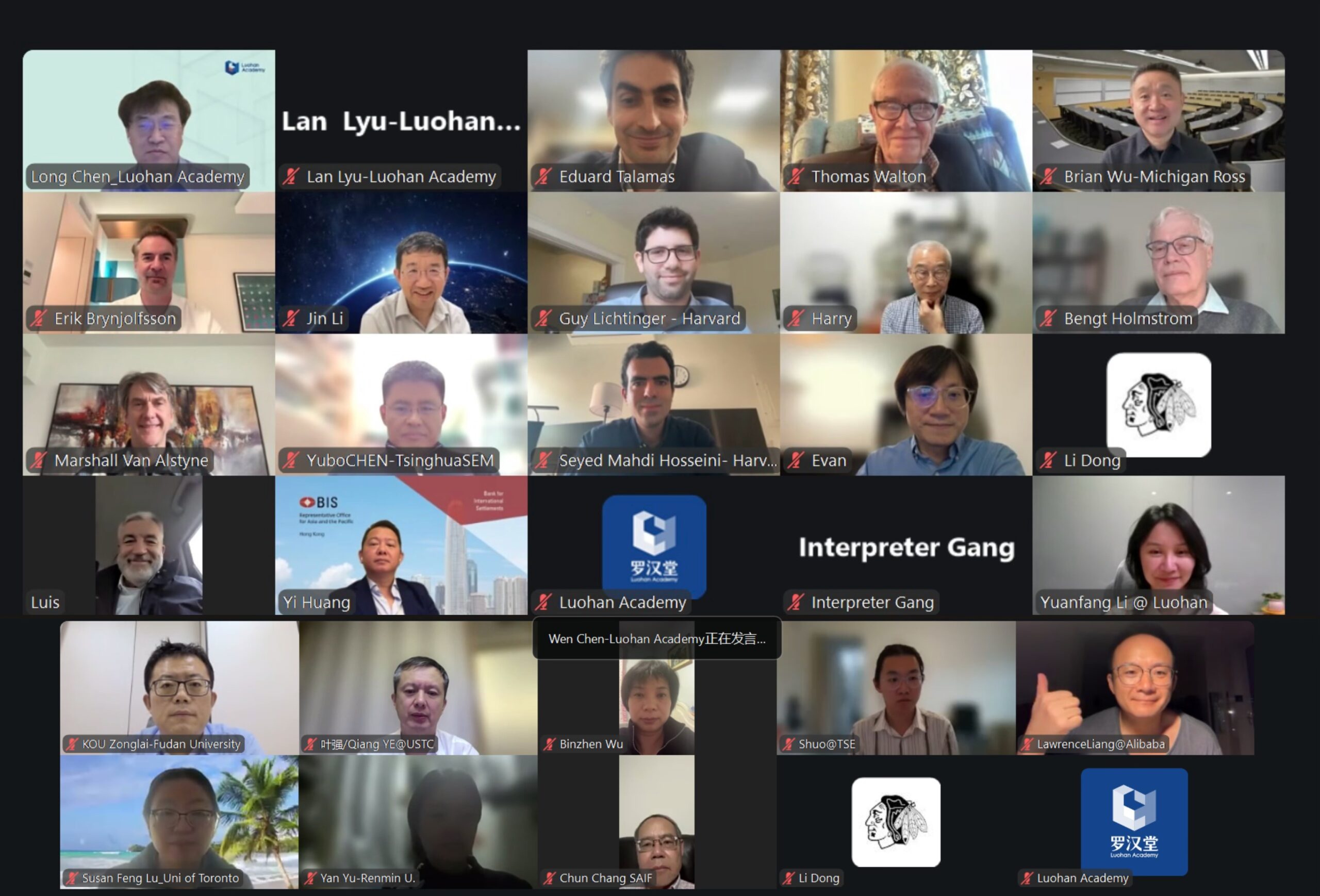
Luohan Academy Frontier Dialogue Explores “Intelligent Organizations and Meta-Knowledge Workers”
Luohan Academy hosted a Frontier Dialogue titled “Intelligent Organizations and Meta-Knowledge Workers”, bringing together over 90…