
Highlighting Organizational Restructuring and New Entrepreneurial Models in the Age of AI
Hong Kong, March 28, 2026 — The Centre for AI, Management and Organization at The University of Hong Kong (HKU CAMO) hosted “Building Your One-Person Company with OpenClaw”, a conference that drew a full house of developers, entrepreneurs, researchers, students, and investors for an afternoon of forward-looking dialogue.
The event centered on a question that is rapidly gaining urgency: as AI tools grow increasingly capable, is the boundary of what a single individual can achieve beginning to converge with the scale of an entire company?
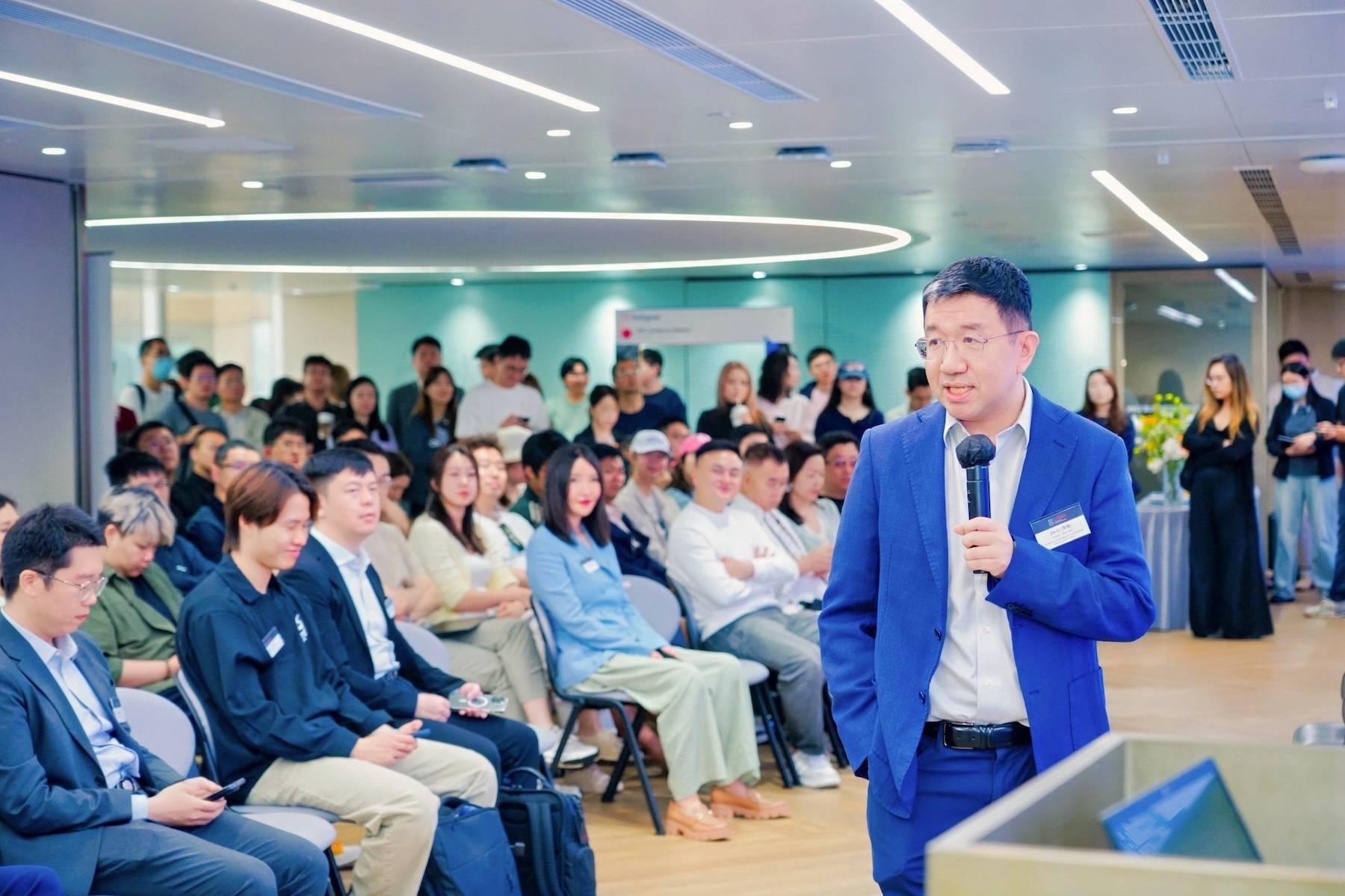
From the “Great Compression” to the One-Person Company, AI Is Redefining Organizational Boundaries
The conference opened with remarks from Professor Jin Li, Director of HKU CAMO and Area Head of Management and Strategy at HKU Business School, who introduced the concept of the “Great Compression.” He argued that artificial intelligence is compressing cognitive differences among individuals at scale, rapidly dismantling the capability barriers once defined by specialized knowledge, accumulated expertise, and cognitive thresholds. In this context, he suggested, the central challenge of management may be undergoing a fundamental shift, from managing people to managing agents.
This framing established the intellectual foundation for the event. As an increasing share of execution is delegated to intelligent systems and agents, the principles governing how organizations are structured, tasks are allocated, problems are defined, and resources are coordinated may all require fundamental reconsideration.
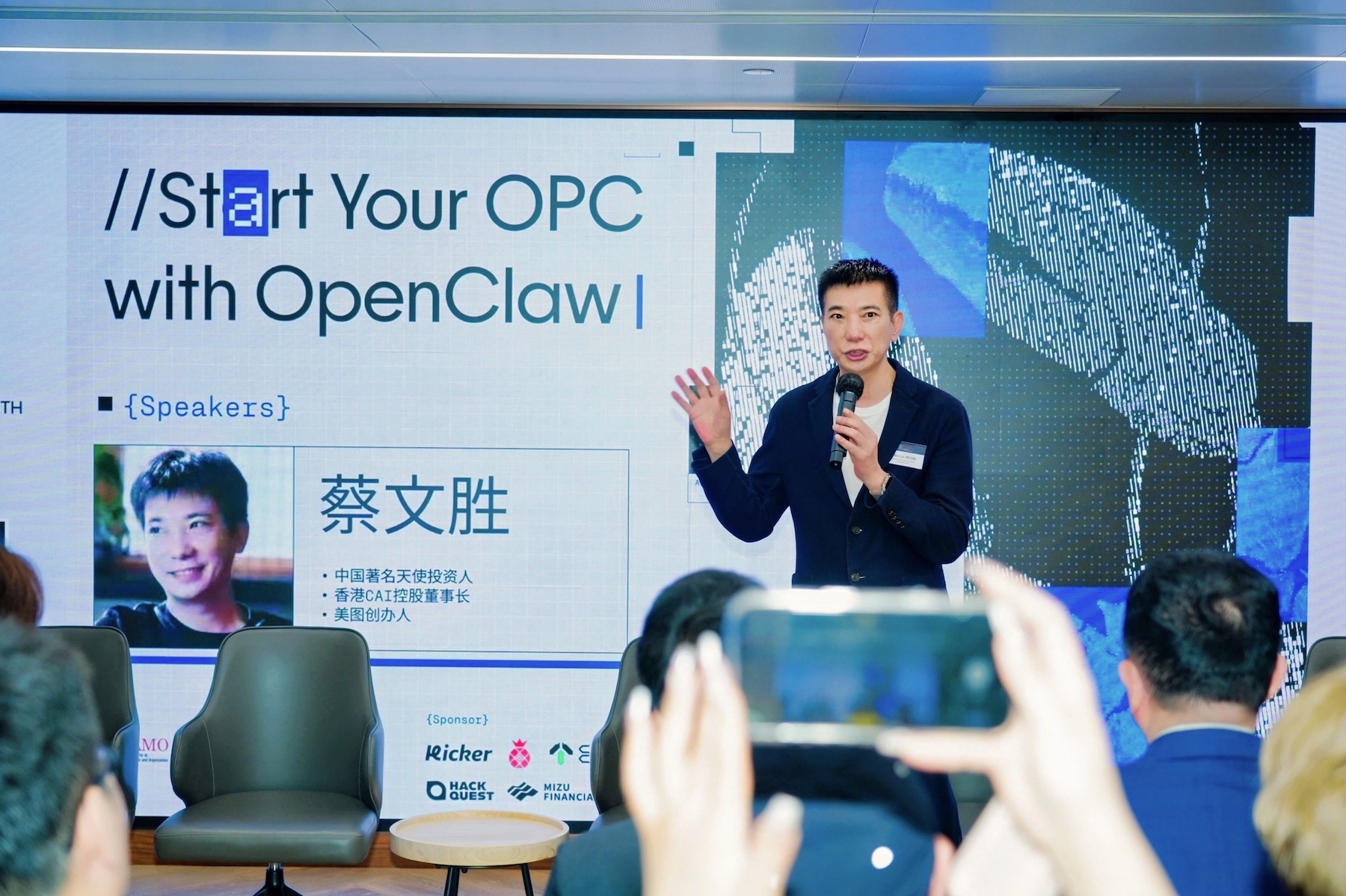
The Scarce Skills of the Future May Be Asking Better Questions and Giving Better Instructions
Cai Wensheng, renowned entrepreneur, angel investor, and Chairman of Meitu, addressed a question at the heart of the AI transition: what human capabilities will matter most? His answer was both concise and striking: the defining skill of the future may shift from discernment to the ability to ask the right questions; and in the era of tools such as OpenClaw, an even scarcer capability may be the ability to give effective instructions.
This perspective quickly emerged as one of the central takeaways of the event. As the cost of execution continues to decline, human value may lie less in completing tasks directly, and more in defining problems, issuing precise instructions, organizing resources, and directing systems toward meaningful outcomes.
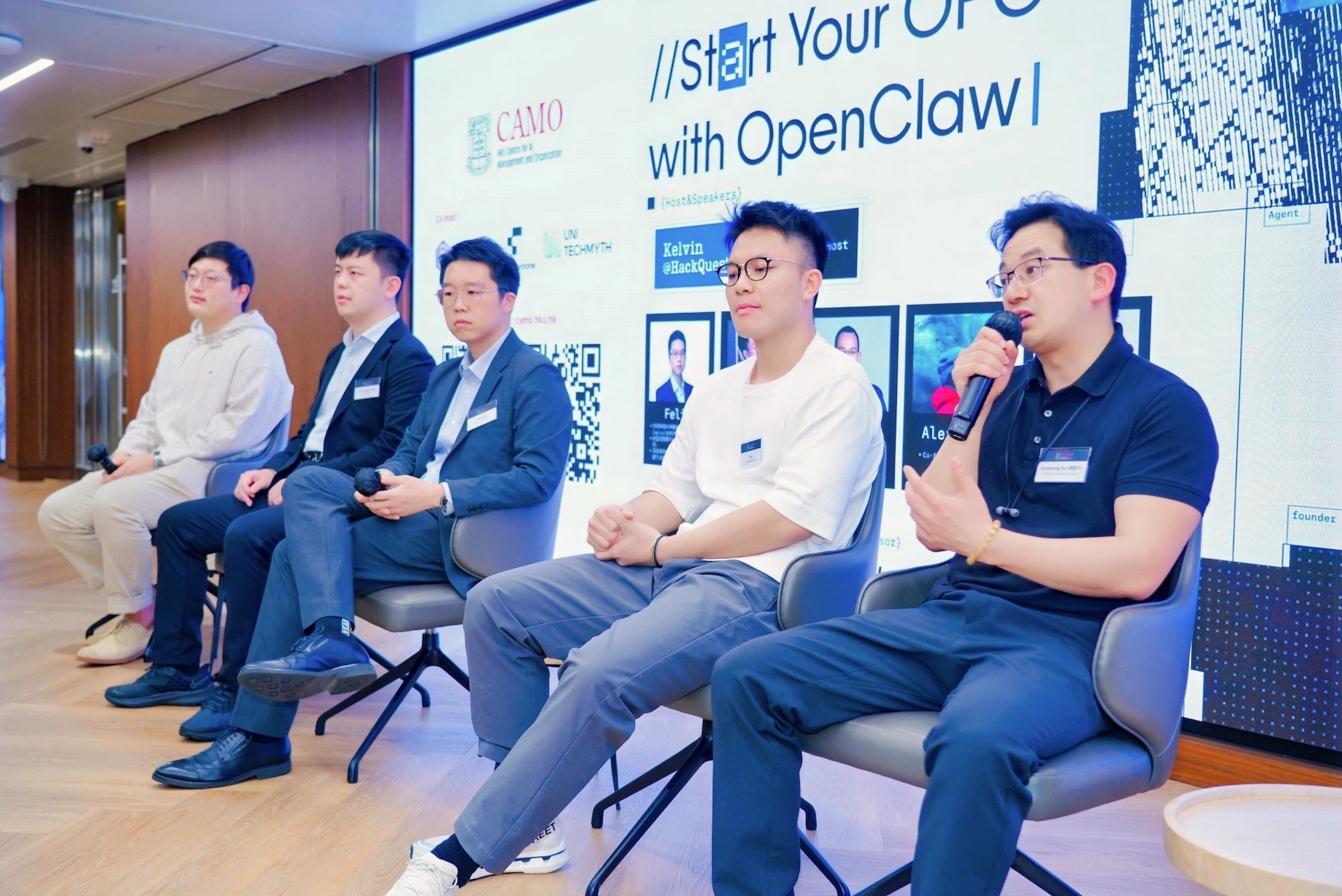
From Investment Perspectives to Builder Practice:
The discussion progressed from broad macro-level insight to on-the-ground experience, with speakers offering perspectives across the entrepreneurial ecosystem:
Felix Xiao, CloudAlpha Capital Analyst, explored how AI tools are reshaping productivity systems, enterprise software, and the economics of small teams from an investor’s lens;
Alex Liu, Co-founder of Kicker, shared how lean teams are leveraging new tools to accelerate workflows and shorten validation cycles;
Dr. Kong Jianping, Founder of Nano Labs and Board Member of Hong Kong Cyberport, outlined structural opportunities emerging from evolving technology and industry ecosystems
Hu Guozhong, Co-founder and President of Shouxu Intelligence, raised a broader civilizational question: how might societal structures evolve as intelligent supply becomes less dependent on human labor
Ryan Chi, Founder and CEO of insiders.bot, and Rex Zheng, Founder of Mizu Financial, each offered practical perspectives on expanding individual capability through predictive markets, workflow design, and independent building
The subsequent panel discussion, moderated by Cameron Wang, Co-founder of HackQuest, brought together Dr. Zhou Wang (Edge AI Scientist), Felix Xiao, Hu Guozhong, Alex Liu, and Rex Zheng to explore what truly valuable capabilities look like in this era, whether the one-person company represents a durable long-term trend, and how the human role is evolving in the age of intelligent systems. AI is not merely a tool for improving efficiency. It is redefining the minimum viable size of a company and reshaping the starting point of entrepreneurship itself.
HKU CAMO: Bridging Frontier Research and Real-World Practice
As organizer of the event, HKU CAMO reaffirmed its role as a leading interdisciplinary platform at the intersection of artificial intelligence, management, and organizational theory. Beyond technology applications, CAMO’s research agenda is focused on how AI is transforming organizational structures, management practices, and the future of work, while building meaningful bridges between academic insight and industry practice.
The event reflects CAMO’s ongoing commitment to engaging with the defining questions of the AI era: as organizational boundaries compress and individual capability expands, new models of entrepreneurship, coordination, and organizational logic are beginning to take shape.